I fell down a Montessori rabbit hole a few years back. You know how it happens. You see one Instagram post of this gorgeous playroom with all wooden toys and tiny furniture sized for children and suddenly it’s midnight and you’re looking at a two hundred dollar learning tower in your cart.
I didn’t buy the tower. But I did spend way too long feeling like I needed all this specific stuff to give my kids a “Montessori experience” or whatever.
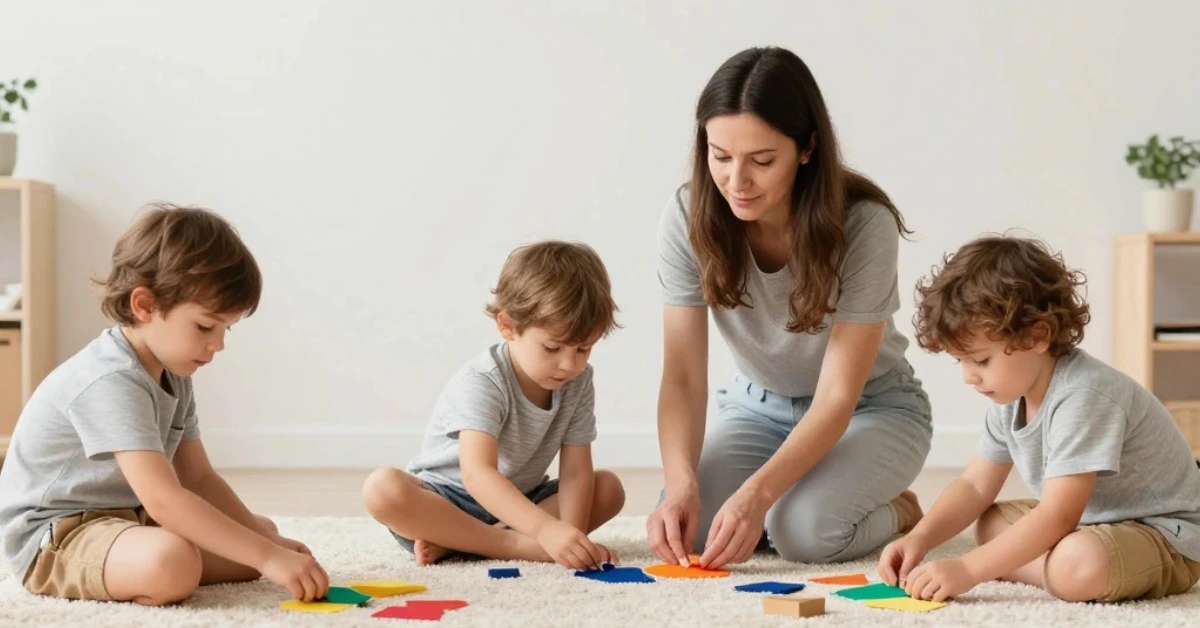
Here’s what I eventually realized though. The actual idea behind Montessori isn’t about buying things. It’s about kids doing real tasks that matter. Following what they’re interested in. Trusting them to handle more independence than we usually think they can.
And you can do all of that with stuff already in your house.
So if you’re curious about this Montessori thing but don’t want to spend a bunch of money on special materials, this is for you. These are things we actually do. Regular household items. No fancy purchases.
This is the main thing honestly. Real tasks that actually contribute to the house and help kids feel capable. They seem almost too simple but kids are genuinely drawn to this kind of work for some reason.
Pouring
Get two small pitchers or cups. Put water in one. Or dried beans or rice if you don’t want to deal with water everywhere while they’re still figuring it out. Kids pour back and forth between the containers.
That’s it. That’s the whole activity.
But here’s why it’s a thing. Pouring takes concentration and hand eye coordination and controlling your movements carefully. And it’s a real skill they’ll actually use. My daughter practiced with rice for maybe a week and then insisted on pouring her own milk at breakfast. Spilled some. Didn’t care even a little bit. She was so proud.
Transferring Stuff With Spoons or Tongs
Two bowls next to each other. One has small things in it like cotton balls or dried pasta or beans. Give your kid a spoon or kitchen tongs and they move items from one bowl to the other.
This builds the same fine motor control they need for writing eventually. And kids find it weirdly satisfying? My son did this for like twenty minutes straight during the toddler years which felt like some kind of miracle at the time.
Make it harder with smaller stuff or tools that need more precision. Tweezers with beads is hard even for bigger kids.
Washing Dishes
I know. You’re thinking my kid can barely keep water inside the bathtub and you want me to let them do dishes?
Yeah. Kind of.
Small tub of soapy water. Another tub for rinsing. A towel. Give them a few unbreakable things to wash. Plastic cups, metal spoons, that one bowl you don’t really care about.
Water will get everywhere the first several times. But they’re learning to do something with multiple steps, they’re doing work that actually matters, and eventually they get decent at it. My kids genuinely help with dishes now. Took a while but we got there.
Folding
Start with something easy like washcloths. Show them fold in half, fold in half again. Let them practice.
This seems too basic to even count. But watch a three year old concentrate really hard on lining up corners of a washcloth and you realize it’s actually challenging for them. Plus they’re learning something they’ll use forever.
We eventually moved to folding their own little clothes. Not perfect. But good enough to put away.
Montessori is big on sensory exploration. Kids learn about the world through senses so activities that involve touch and sound and all that are valuable apparently.
Mystery Bag
Put some small random objects in a bag or pillowcase. Different textures and shapes work best. Wooden spoon, cotton ball, small toy car, pinecone from outside.
Kids reach in without looking, feel something, guess what it is before they pull it out.
Harder than it sounds. They have to really pay attention to what they’re feeling and connect it to things they know. My kids ask to play this regularly which tells me they actually like it and aren’t just going along with my weird activities.
Sound Matching
Find pairs of small containers you can’t see through. Film canisters if those still exist in your house somehow. Plastic Easter eggs. Little jars.
Fill pairs with the same stuff. Rice in two, beans in two, coins in two. Mix them all up and kids shake them to find matches by sound.
Memory but for your ears. Needs focus and careful listening.
Texture Walk
Gather things with different textures from around the house. Smooth, rough, soft, bumpy, scratchy. Lay them out and let kids feel everything and talk about what they notice.
For older kids you can blindfold them and have them describe textures without seeing. Or sort by how things feel.
Montessori classrooms have tons of activities for strengthening little hand muscles. Most of them you can do at home.
Threading
Find something with holes and something to put through them. Pasta with big holes and yarn. A colander and shoelaces. Cardboard with punched holes and string.
My daughter spent an entire afternoon threading yarn through colander holes once. Did not know a colander could provide entertainment but here we are I guess.
This directly gets hands ready for writing by building small muscle control for holding pencils.
Cutting
Give kids scissors and stuff to cut. Old magazines, junk mail, scrap paper. Let them just go at it.
You can draw lines for them to follow if they want structure. Or just let them experience cutting freely. Both are fine.
Supervise obviously. But even little kids can learn to use scissors safely with practice.
Opening and Closing Containers
Gather containers with different kinds of closures. Jars with screw lids, boxes with latches, bags with zippers, things with snap tops.
Let kids practice opening and closing everything.
This sounds almost too silly to be a real activity but think about how many different hand movements are involved. Twisting pinching pulling pushing. It’s actually good practice. And kids love containers. I have no explanation for why. They just do.
Montessori stuff often involves sorting and putting things in order. Builds math thinking and logic apparently.
Color Sorting
Gather small things in different colors. Toys, household objects, whatever. Set out bowls or paper in matching colors and kids sort everything.
Younger kids start with two or three colors. Older kids can handle more.
We’ve done this with Legos and fruit snacks. The fruit snacks got eaten eventually which was fine.
Size Ordering
Find similar things in different sizes. Measuring cups and spoons are perfect. Nesting bowls. Different lids.
Arrange smallest to biggest or the other way.
This teaches bigger and smaller and comparing without any formal teaching really. Math through their hands.
Category Sorting
Mixed pile of small items. Sort into groups. Animals and vehicles. Kitchen things and bathroom things. Hard and soft.
Let them make up their own categories too which is interesting. Kids notice connections adults miss sometimes.
Montessori is big on nature connection. Doesn’t require buying anything because nature is just there.
Collections
Go outside and get interesting stuff. Leaves, rocks, sticks, seed pods, flowers. Bring them in and look at them. Sort them. Arrange them. Talk about them.
We have a nature shelf which is really just part of a bookshelf where my kids put their current treasures. Pinecones and acorns and that one rock they found that they’re very attached to.
Leaf Matching
Get leaves from different plants. Make a guide by taping one of each to paper. Kids go find more leaves and match them to the guide.
Builds observation skills and introduces plant stuff in a natural way. Ha. Natural. Anyway moving on.
Plant Care
Kids water a plant. Show them how to check if soil is dry, how much water, where to pour.
Real responsibility for a living thing. That’s actually meaningful. My kids take plant duty very seriously.
Here’s what I wish someone told me earlier. You don’t need to make your house look like a Montessori classroom to use these ideas. The whole thing is just about treating kids like capable people and giving them chances to do stuff that matters.
Let them help with real tasks even when it takes longer. Let them make choices. Set things up so they can be independent even in small ways.
That’s free. It just means thinking differently about what kids can handle.
So forget the expensive materials. You already have what you need.
What Montessori type stuff have you tried? I’m always curious how other people do this with whatever they have around. Simpler is better in my opinion.