I remember standing in the cleaning aisle at Target reading the back of some all-purpose cleaner and realizing I couldn’t pronounce like half the ingredients. That was the moment I started wondering what exactly I was spraying everywhere my kids touch constantly.
Then I went down a rabbit hole. And honestly it was a lot. Every website said different things. Some claimed everything was giving us cancer. Others said people were overreacting and it’s all fine. I had no idea who to believe or where to even start.
If you’re in that place right now, feeling like you should probably change some things but not sure what actually matters, this is for you. I’m not an expert. Just a mom who spent way too much time researching and eventually landed on a reasonable approach that doesn’t require throwing everything out and starting fresh.
The goal isn’t perfection. It’s making better choices where it counts most without losing your mind or your whole paycheck.
Let me be clear. I’m not here to terrify you about everything in your house. The dose makes the poison as they say. Tiny amounts of questionable stuff aren’t gonna harm your family.
But here’s the thing though. We’re exposed to a lot of different chemicals every day. Cleaning products, personal care stuff, food containers, furniture. Each exposure might be small but they add up. Researchers call this our toxic load.
Kids are more vulnerable for a few reasons. Bodies are smaller so same exposure is proportionally bigger. Systems still developing. And they do things like crawl on floors and put hands in mouths constantly.
So reducing exposure where you reasonably can makes sense. Not from panic. From just being thoughtful about what you bring home.
Good news is you don’t have to change everything. Small swaps over time actually add up.
You could spend months researching every category. Or focus on the stuff that matters most and get real benefits without the overwhelm.
Here’s where I’d start if I was doing this over.
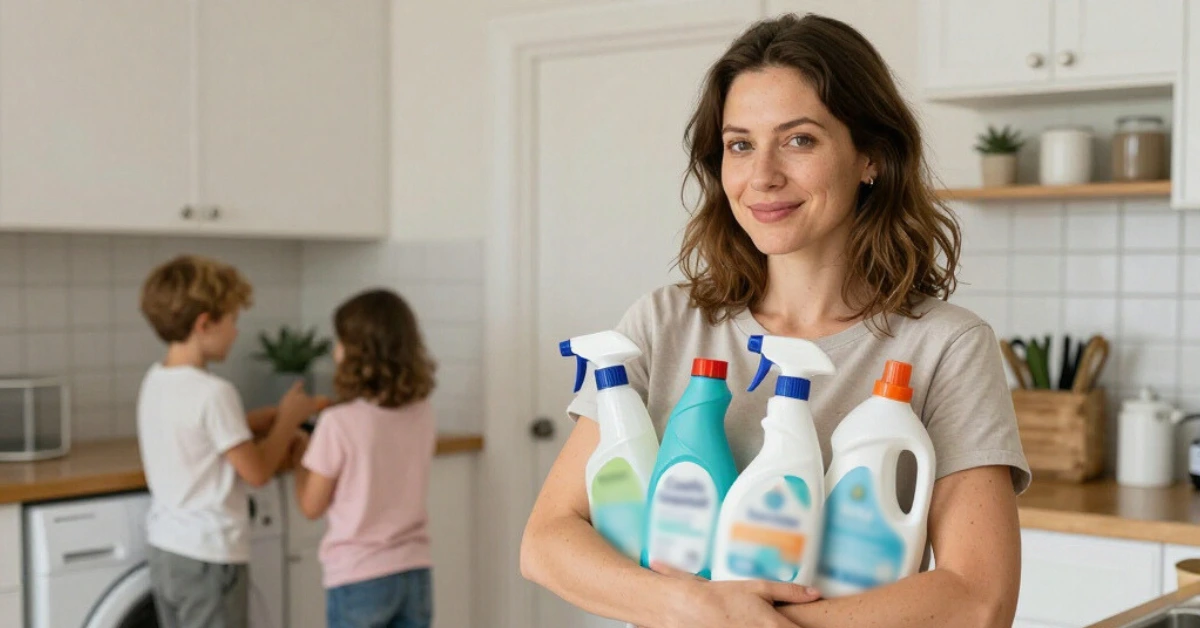
Most obvious and honestly easiest. Conventional cleaners often have phthalates, synthetic fragrances, harsh chemicals that linger on surfaces and in air.
Your kids touch those surfaces. Breathe that air. And most of these products don’t even need to be that intense for regular cleaning anyway.
All-purpose: You can make your own with white vinegar, water, maybe some essential oil if you want it to smell nice. Or buy premade from Branch Basics, Seventh Generation, Method. I’ve tried a bunch and they work just as well for everyday messes.
Dish soap: Switched to plant-based years ago and never went back. Seventh Generation, ECOS, Mrs. Meyer’s all work great. Dishes are clean. Only difference is I stopped breathing synthetic fragrance while washing.
Laundry detergent: This one matters because residue stays on clothes and bedding touching skin all day and night. Look for fragrance-free or essential oil scented only. We use Molly’s Suds powder and I really like it.
Bathroom stuff: Don’t need heavy duty for regular cleaning. Baking soda and vinegar handle most things. Non-toxic options exist for tougher jobs.
Not gonna tell you throw all your plastic out because that’s wasteful and expensive. But when stuff wears out or you’re buying new, consider other options.
Main concern is chemicals leaching into food especially when heated. So at minimum don’t microwave in plastic and don’t put hot food in plastic containers.
Glass containers: Last forever, don’t stain or absorb smells, completely inert. Pyrex type brands are affordable and everywhere. Been using the same ones for years.
Stainless steel: Great for kids’ lunches because they won’t break when dropped. Also good for water bottles.
Silicone: Good for bags and stretch lids. Make sure it’s food-grade.
We switched kids to stainless steel water bottles and it was one of my best decisions. No weird plastic taste, easy to clean, survived being thrown and dropped countless times.
This category is huge and gets overwhelming fast. Shampoo, soap, lotion, sunscreen, diaper cream, toothpaste. Every family member has a bunch of products going on their body daily.
Skin absorbs some of what we put on it. Not everything, not as much as alarmist websites claim, but enough that it’s worth attention for stuff you use regularly.
Start with products used most often and ones that stay on skin longest.
Lotion: Goes all over body and stays on. Worth choosing carefully. Avoid synthetic fragrance, parabens, phthalates. I like Pipette for kids and Earth Mama for baby stuff.
Sunscreen: Most important thing is that it actually works. Mineral sunscreens with zinc oxide generally considered safer than chemical ones. They’ve gotten way better and don’t leave as much white cast anymore. Badger, ThinkBaby, Beautycounter all make good ones.
Soap: Basic is usually better. Don’t need antibacterial. Castile soap like Dr. Bronner’s works great, or gentle options without long ingredient lists.
Toothpaste: For kids I prefer avoiding artificial dyes and sodium lauryl sulfate. Plenty of natural options now that taste good and have fluoride if you want it.
This one surprised me when I started researching. Non-stick pans with traditional coatings can release fumes when overheated and coating breaks down over time.
Don’t need to replace everything immediately. But when non-stick pans get scratched up, consider:
Cast iron: Takes more care but lasts literally forever. My grandmother’s skillet still going strong. Once seasoned it’s pretty non-stick naturally.
Stainless steel: Great for most cooking. Things might stick more but that’s what oil is for.
Ceramic coated: More non-stick option without traditional coatings. GreenPan and Caraway make nice ones.
I didn’t replace all my pans at once. Just stopped buying traditional non-stick and gradually built a better collection over a couple years.
Some simple things to watch for.
“Fragrance” or “Parfum”: This one word can hide dozens of undisclosed chemicals. Big one to avoid especially if sensitive or cautious.
Parabens: Listed as methylparaben, propylparaben, etc. Preservatives with some hormonal concerns.
Phthalates: Often hidden in fragrance but sometimes listed. Linked to hormone disruption.
Sodium Lauryl Sulfate: Foaming agent that can irritate. Not the worst but worth avoiding for sensitive skin.
Long chemical names you can’t pronounce: Not automatically bad but worth looking up if there’s a lot of them.
EWG (Environmental Working Group): Database where you look up products and see ratings. Not perfect but useful starting point.
Made Safe certified: Pretty rigorous certification screening for harmful ingredients.
USDA Organic: For food and some personal care.
Honestly I don’t research every single product exhaustively. I use EWG’s app for a quick scan when considering something new, found a few brands I trust, mostly stick with those.
Something people don’t always mention. Non-toxic products can cost more. Not always but often. Real barrier for lots of families.
Some things that help:
DIY basics: Cleaning supplies especially are easy and cheap to make. Vinegar, baking soda, castile soap, few essential oils handle most household cleaning for way less than buying products.
Concentrates: Brands like Branch Basics sell concentrates you dilute. Higher upfront but more economical per use.
Prioritize: Don’t have to swap everything. Focus on products used most or that concern you most. Even just switching cleaning products and lotion makes meaningful difference.
Store brands: More mainstream stores offering cleaner options now. Target’s Everspring line for example is more affordable than specialty brands and avoids the worst stuff.
Sales: Stock up when brands you like go on sale. I buy dish soap and laundry detergent in bulk when prices are good.
This is maybe the most important part.
You’re not going to make your home perfectly non-toxic. Not a realistic goal and chasing it will make you anxious and miserable. World’s full of chemicals and some exposure is unavoidable.
What you can do is make better choices more often. Reduce overall load. Be thoughtful without being paranoid.
When I started I drove myself a little crazy trying to research everything and make perfect decisions. Now I’m way more relaxed. Choose cleaner options when reasonably available and affordable. Don’t stress about occasional exposures or situations I can’t control.
My kids eat off restaurant plates. Play with toys at other people’s houses. Use soap in public bathrooms. That’s fine. Because at home, where we have most control and where they spend most time, we’ve made choices reducing their everyday exposure.
That’s enough. Really.
If you’re feeling motivated here’s what I’d suggest.
First, don’t throw anything away. Use what you have. Waste isn’t healthy either.
Second, pick one category to focus on first. I’d recommend cleaning products because swaps are easy and affordable and you’ll use them up relatively quickly.
Third, research two or three brands in that category. Read some reviews. Maybe check EWG ratings.
Fourth, next time you run out of something in that category, buy the better option.
That’s it. No dramatic overhaul. One better choice, then another, then another. Over time your home shifts toward cleaner products without any overwhelming moment.
What have you already swapped or thinking about changing? Always curious what other families prioritize because everyone’s situation is different.