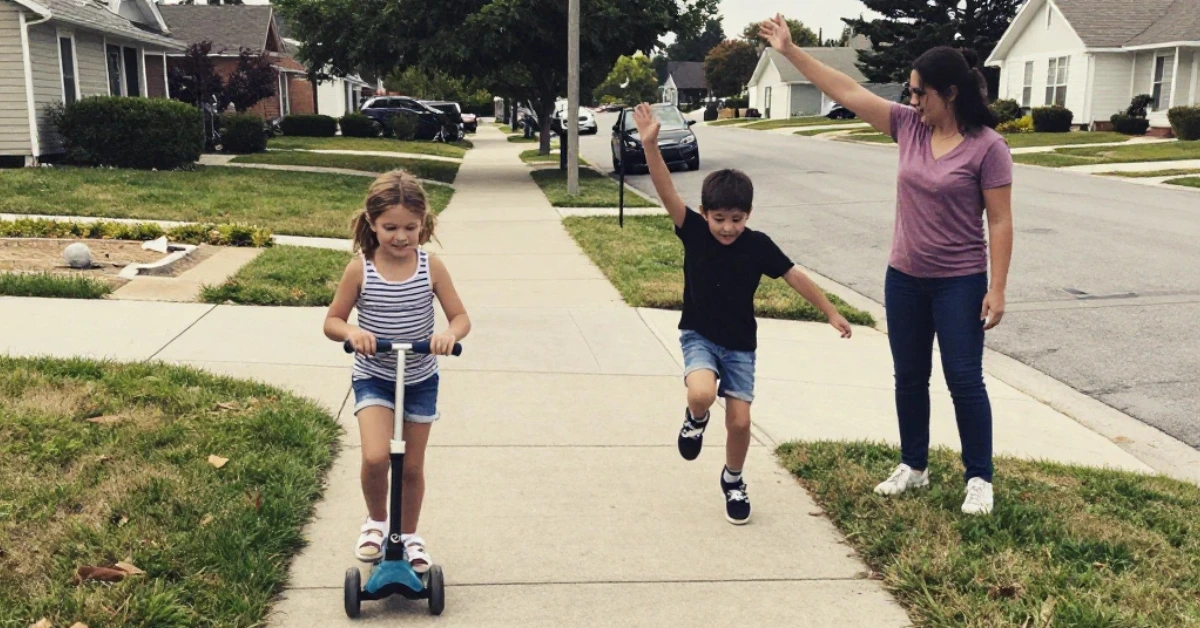
My son came home from school last week, dropped his backpack by the door, and immediately asked about video games. When I suggested going outside first he looked at me like I’d proposed something completely unreasonable. “But I’m tired,” he said. From sitting at a desk all day.
I get it though. I do. Screens are appealing. The couch is comfortable. And kids now have so many entertainment options that don’t require moving at all.
But here’s what I notice over and over. The same kid who says he’s too tired for outside will run around for two hours once he actually gets out there. The resistance is to starting. Not to the activity itself. Once they’re moving they don’t want to stop.
So the challenge isn’t convincing kids that activity is good for them. They don’t care about health benefits. They care about fun. Our job is making movement the easy obvious appealing choice more often than it isn’t.
After years of figuring this out with my own kids, here’s what actually works.
Kids don’t want to exercise. That word sounds like work and obligation and something adults force on them. But they absolutely want to play. They want fun. They want to run around being ridiculous with people they like.
So stop using the word exercise.
Don’t say “you need exercise today.” Say “want to play tag?” or “let’s see who jumps highest” or “bet you can’t catch me.”
The physical benefits are identical. A kid playing chase gets the same workout as a kid doing structured exercise. But one feels fun and one feels like a chore.
Frame movement as play whenever possible. Because that’s what it should be for kids anyway.
This one is inconvenient but also the most effective thing on this list. Kids are way more likely to be active when you’re active with them.
I know you’re tired. I know there’s stuff to do. I know sometimes you just want to sit for five minutes.
But when I tell my kids to go play outside while I stay in doing dishes, they last maybe ten minutes before they’re back. When I go out with them, even just sitting on the porch watching, they’ll play for an hour. And when I actually play with them? Running around, kicking balls, being silly? They stay out until I make them come in.
Your presence changes everything. You don’t have to do it every time. But the more you join, the more they connect movement with fun and connection.
Plus honestly it’s good for us too. I always feel better after running around the backyard even when I didn’t feel like it initially.
Activity doesn’t have to mean dedicated exercise time. It can be part of things you’re already doing.
Walk to school if it’s close enough. Or park a few blocks away and walk the rest. Bike to the library instead of driving. Take stairs whenever there’s a choice. Dance parties while getting ready in the morning.
We do this commercial break challenge during the one show my kids watch in the evening. Every break we all get up and do something. Jumping jacks, running in place, who can hold a plank longest. Few minutes at a time but it adds up.
Look at your daily routine and ask where movement could fit naturally. Often easier than carving out separate time.
I’m not gonna tell you to eliminate screens because that’s not realistic and also I need them sometimes for my own sanity. But the less available screens are, the more likely kids find active entertainment.
We have a rule that screens don’t happen until after outside time on weekdays. If they want their show or game time they know outside comes first. Removes the negotiation because it’s just how things work.
Some families do screen free hours. Some do no screens until homework and chores are done. Some keep it for weekends only. Whatever works for you.
The point isn’t being anti technology. It’s making sure screens aren’t the default whenever kids are bored. When screens aren’t available kids get creative. They play. They move. They remember toys and games and their own imagination exist.
If you want active kids, make activity easy and appealing.
Keep outdoor stuff accessible. Balls, jump ropes, chalk, bikes. If they’re buried in the garage behind everything else nobody’s gonna bother. If they’re right by the door, grabbing something becomes natural.
Inside think about what invites movement. Mini trampoline in the playroom. Basketball hoop over a door. Clear space where kids can dance or tumble without breaking things.
We made one corner of the basement the “active corner” with some foam mats, small trampoline, and a bar for hanging and swinging. Kids gravitate there when energy needs burning and it’s raining.
Environment shapes behavior more than you’d think.
“Go outside and play” gets more resistance than “do you want to ride bikes or play basketball?”
When kids feel control over what they’re doing they cooperate more. Choices maintain your goal while giving them agency.
Works especially well for my stubborn one. If I tell him to do something his instinct is resist. Give him options and suddenly it’s his idea.
Expand the choices to make it feel bigger. “What should we do outside today? Walk to the park, set up the sprinkler, scooter race, or play catch. What sounds good?”
Same outcome. Very different energy.
Kids will do almost anything if friends are doing it too. Activity is way more appealing as a social event.
Invite neighborhood kids over. Do playdates at the park not at home. Sign up for team stuff if your kid’s interested.
Even within family, making it social helps. Sibling games. Family competitions. Challenges where everyone participates.
My kids whine about walking if it’s just a random Tuesday thing. But if we call it a “family adventure walk” and everyone comes including the dog and maybe we’re looking for cool rocks or counting birds? Totally different response.
Activity itself matters less than who they’re doing it with.
Some kids love competing. Motivated by winning and scores and being best.
Other kids are completely turned off by it. Don’t want to race because they might lose. Don’t want sports because they’re not good enough. Pressure makes everything stressful instead of fun.
Know which kid you have. And even with competitive kids, not everything should be about winning.
Play games where everyone’s on the same team. Do stuff with no score. Emphasize effort and fun over results.
We play cooperative versions of games a lot. Instead of who keeps the balloon up longest, how many times can we all tap it before it hits the ground. Instead of racing each other, racing against the clock.
Goal is movement not achievement. Keep it light.
Sounds counterintuitive I know. But sometimes the best way to get kids moving is letting them be bored with nothing to do.
When we fill every moment, when screens are always there, when activities are always planned, kids never figure out how to entertain themselves. But when they’re bored with no easy options they get creative. Often that creativity leads to physical play.
I’ve watched my kids go from “there’s nothing to do” to inventing elaborate backyard games within twenty minutes of me refusing to solve their boredom.
Uncomfortable at first. They complain. They follow you around whining. But hold the line and eventually they find something. Often it involves moving because that’s what kids naturally want when nothing else is available.
When kids are active, acknowledge it. But don’t make such a big deal it becomes performative and strange.
“That was fun playing out there with you” works better than “Great job exercising today! Physical activity is so important for your health!”
Kids can smell when we’re trying too hard to turn something into a lesson. If being active feels like something they do for our approval it loses appeal.
Keep it natural. Keep it light. Let active play be a normal part of life, not something special requiring commentary every time.
Goal is for movement to be unremarkable. Just something your family does. Every day, small ways, without thinking hard about it.
Getting kids more active isn’t about any single strategy. It’s creating a family culture where movement is normal and enjoyable and woven into everyday life.
Takes time. Doesn’t happen from one article tip. Happens slowly through consistent choices adding up over months and years.
Some days more active than others. Some seasons make it harder. That’s fine. Not aiming for perfection. Aiming for a general direction.
More movement than yesterday. More play than screens. More time in bodies than in chairs.
That’s enough.
What gets your kids moving? Always curious what works for different families because every kid is different. What motivates one fails completely for another. Share if you’ve got secrets.